Oil Boiler vs Gas Boiler: Which Is Best for Your Irish Home?
Choosing between an oil boiler and a gas boiler for your Irish home? We compare costs, efficiency, availability, and environmental impact to help you make the right decision.
Emergency Plumber Athlone
3 February 2026
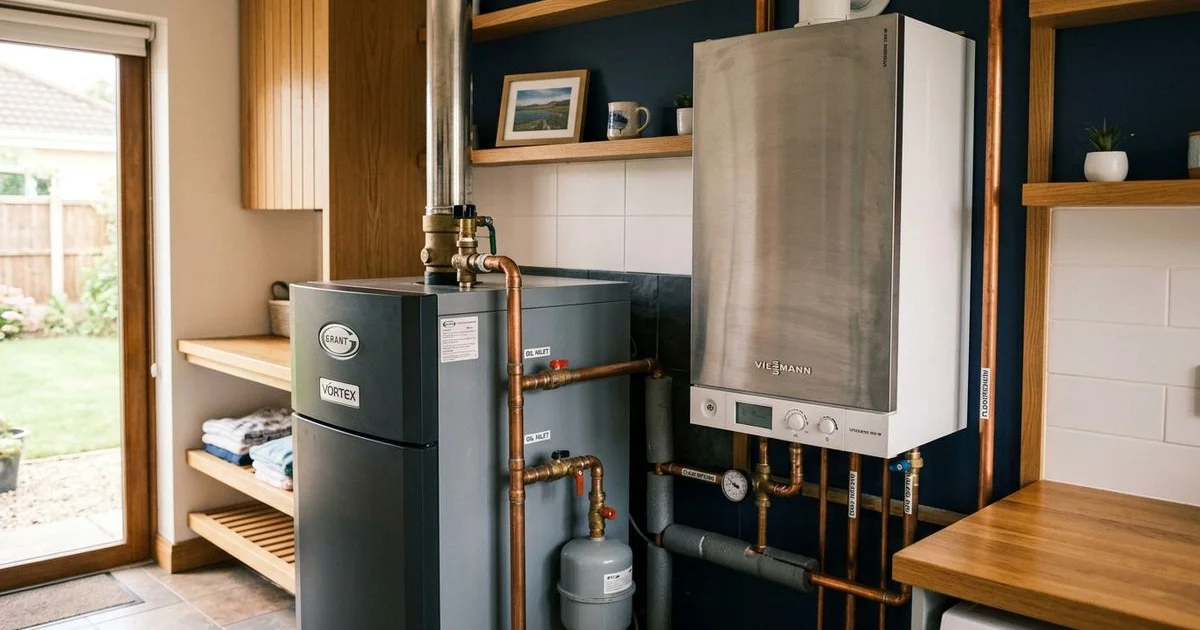
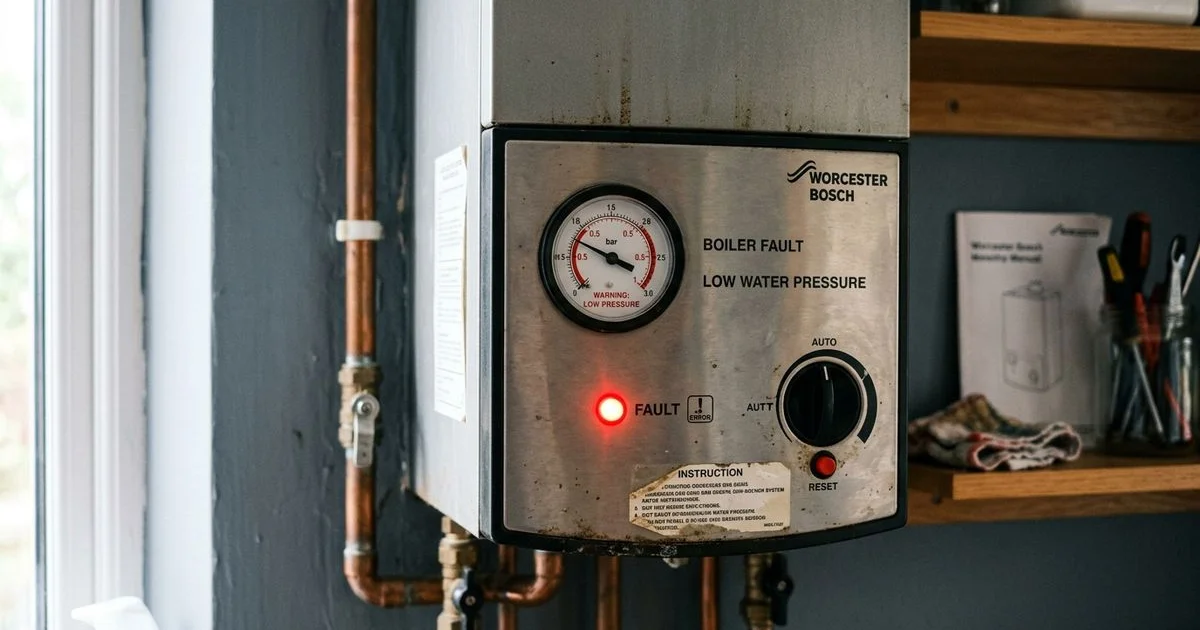
We see the sheer panic a sudden heating failure causes during a freezing Irish winter. A dead system forces you to make a major financial decision under immense pressure. Our professional service team fields these emergency callouts daily across the midlands. You simply want your house warm again as quickly as possible.
We install, repair, and maintain both oil boilers and gas boilers locally. This daily, hands-on work gives us a completely neutral perspective on which system truly performs best.
Let’s look at the hard data to determine the winner of the Oil Boiler vs Gas Boiler: Which Is Best for Your Irish Home? debate. I will outline exact replacement costs, hidden maintenance traps, and long-term reliability so you can choose confidently.
The Current Landscape in Ireland
Before choosing a replacement unit, you should understand how unique the Irish heating market is compared to the rest of Europe. A 2025 report from the Sustainable Energy Authority of Ireland (SEAI) highlights a clear divide in how we heat our homes.
Our engineers see this split firsthand every day on the road. The type of fuel you use often depends entirely on your exact postcode.
Here is a quick snapshot of the current national infrastructure:
- Heavy Oil Dependency: Approximately 686,000 Irish households rely on oil as their primary heat source. This accounts for roughly 37% to 40% of the country, making Ireland exceptionally dependent on delivered kerosene.
- Expanding Gas Grids: Gas Networks Ireland currently supplies over 720,000 homes. This infrastructure heavily favours urban centres and expanding suburban developments.
- The Rural Divide: If you live outside major towns in Westmeath, Roscommon, Offaly, or Galway, the natural gas pipeline likely stops miles from your front door.
This means many midlands residents have oil as their only viable fossil-fuel option. If your property sits on the gas grid, you have a critical financial decision to make.
Installation Costs
Upfront pricing is usually the first question on a homeowner’s mind during a breakdown. Let’s break down the exact capital required for both systems in 2026.
Oil Boiler Installation
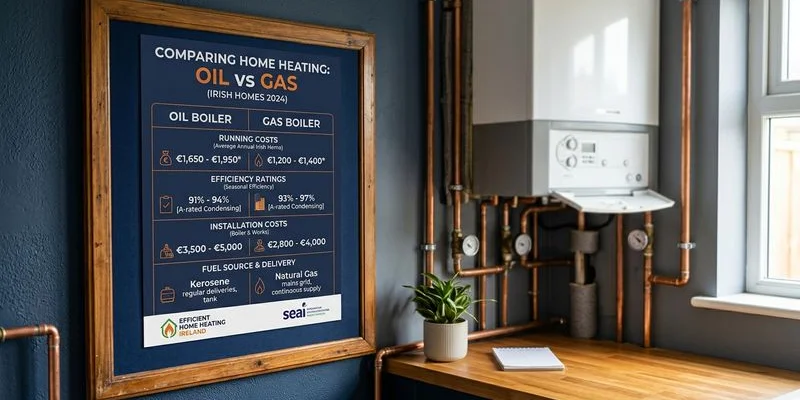
A new oil boiler installation in Ireland typically costs between €3,000 and €5,500. This highly variable price depends on the specific brand, the kilowatt output required for your radiators, and the complexity of the pipework.
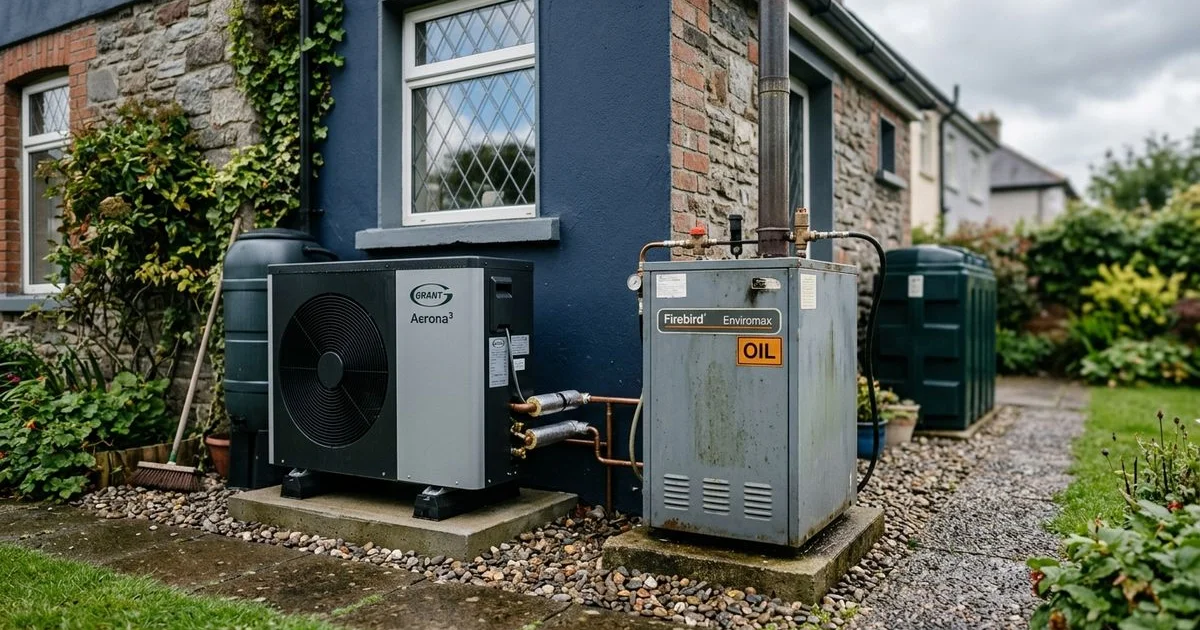
We frequently install highly rated units from Grant Engineering, a company conveniently based right here in Birr, County Offaly. Supporting a local manufacturer often means parts are incredibly easy to source during emergency winter repairs.
A standard replacement quote usually covers several key components:
- The A-rated condensing boiler unit
- A new flue and external oil supply line modifications
- Upgraded heating controls (like a smart thermostat)
- Full chemical system flush and labour
Replacing an existing oil unit sits at the lower end of that price scale because your tank and primary pipes are already set up. Starting from scratch requires a brand-new double-skinned oil tank, adding an extra €800 to €1,500 to your final bill.
Gas Boiler Installation
A standard gas boiler replacement typically ranges from €2,500 to €4,500. The initial hardware costs for premium brands like Worcester Bosch or Ideal are generally lower than their heavy-duty oil equivalents.
Our technicians find gas installations slightly more straightforward. The units are lighter, there is no bulky storage tank to position in the garden, and the fuel line pipes directly into the property.
If your street has a gas main but your house is not hooked up, you must pay Gas Networks Ireland for a new connection. A standard domestic connection up to 15 metres currently costs around €250 to €400, though complex trenching work will increase that fee quickly.
Running Costs
Your daily running costs dictate how much financial strain your heating system causes month after month. This is where the two fuel types show their true differences.
Oil Heating Costs
Home heating oil (kerosene) pricing is incredibly volatile. Global crude markets, shipping disruptions, and seasonal winter demand dictate what you pay at the pump.
Throughout late 2025 and early 2026, kerosene prices frequently hovered between 105 and 115 cents per litre. A typical three-bedroom semi-detached home will consume enough oil to cost between €1,200 and €2,000 annually.
This unpredictability makes household budgeting very frustrating. A cold snap combined with a global supply issue can add hundreds of euros to a single tank refill.
Gas Heating Costs
Natural gas tariffs from providers like Bord Gáis Energy or Electric Ireland offer much more stability. You pay a set rate per kilowatt-hour, shielding you from the aggressive daily price swings seen in the oil market.
Our customer feedback shows the average three-bedroom home spends between €1,000 and €1,600 a year on gas. This continuous piped supply generally works out 10% to 20% cheaper annually than kerosene.
The Convenience Factor
Gas wins the convenience category effortlessly. The supply flows directly into your utility room without any manual intervention.
Oil requires strict monitoring to ensure you never run dry during a freezing weekend. You have to schedule heavy delivery lorries, ensure access to your back garden, and pay for fuel in massive lump sums rather than spreading the cost over monthly direct debits.
Efficiency Comparison
Modern heating technology has levelled the playing field regarding raw performance. Under current European ErP (Energy-related Products) directives, any new boiler sold in Ireland must meet strict efficiency standards.
| Feature | Modern Oil Boiler | Modern Gas Boiler |
|---|---|---|
| Average Efficiency | 92% to 95% | 92% to 96% |
| Old Model Efficiency | 70% to 80% | 70% to 80% |
| Condensing Tech | Yes (Mandatory) | Yes (Mandatory) |
| Typical Lifespan | 15 to 20 years | 15 to 20 years |
Both systems utilise condensing technology to capture waste heat from the exhaust flue and recycle it back into the system. An A-rated model of either fuel type will convert roughly 90 to 95 cents of every euro you spend directly into usable heat.
Our team routinely removes 20-year-old cast iron boilers operating at barely 70% efficiency. Upgrading to a new condensing unit, regardless of the fuel type, immediately slashes fuel consumption by up to 30%.
Environmental Impact
Ireland has aggressive climate targets, making your home’s carbon footprint a major factor in this decision.
Carbon Emissions and Taxation
Natural gas is a fossil fuel, but it burns much cleaner than oil, producing roughly 20% to 25% less carbon dioxide per kilowatt of heat.
The Irish government uses the Carbon Tax to discourage heavy fossil fuel use. In May 2025, the carbon tax on home heating fuels increased to €63.50 per tonne.
This tax makes every single oil delivery noticeably more expensive. The government plans to raise this levy steadily to €100 per tonne by 2030, meaning kerosene will face much harsher financial penalties than natural gas over the next five years.
Future-Proofing
Neither gas nor oil is a permanent, long-term solution for a zero-carbon future. New build homes are already restricted from installing traditional oil boilers, pushing the market toward renewable technologies.
We advise homeowners to solve their immediate heating emergency first. A boiler installed today will last 15 to 20 years, and no current legislation forces you to rip out a functioning system.
If you want to explore the renewable route right now, check out our dedicated guide on heat pumps vs oil boilers for a deep dive into retrofitting your property.
Availability and Location
Your physical address often makes this choice for you before you even check a price tag.
Gas Network Coverage
The gas network reliably covers major midlands hubs like Athlone, Mullingar, and Tullamore. If you live inside these town boundaries, connecting is usually simple and highly recommended.
You can type your Eircode into the Gas Networks Ireland website map to instantly verify your connection status.
Oil Availability
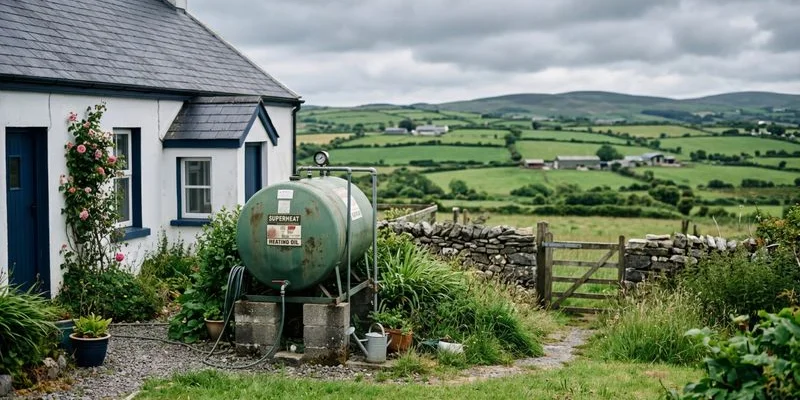
Kerosene delivery trucks travel down every boreen and dirt road in the country. If your home sits outside the main town limits, oil remains the most logical, practical, and heavily supported heating method available to you.
Maintenance and Reliability
A boiler is only as reliable as the mechanic who services it. Both systems require strict annual maintenance and regular heating repairs to prevent deadly carbon monoxide leaks and sudden winter breakdowns.
Oil Boiler Maintenance Hacks
Oil systems demand slightly more physical upkeep because kerosene creates heavy soot as it burns.
- OFTEC Certification: Always use an OFTEC-registered technician to ensure proper combustion calibration.
- Sludge Build-up: Kerosene tanks accumulate thick sludge over the years, which eventually clogs your fuel pump.
- Nozzle Replacement: The fuel injection nozzle must be replaced annually to maintain an efficient spray pattern.
- Filter Upgrades: We strongly recommend installing a magnetic system filter to catch metallic debris before it destroys your circulation pump.
Gas Boiler Maintenance Hacks
Gas units run cleaner, resulting in less internal scrubbing during an annual service.
- RGI Certification: It is a strict legal requirement in Ireland to only use a Registered Gas Installer (RGI) for any gas appliance work.
- Condensate Pipes: The number one cause of gas boiler lockouts during an Irish winter freeze is a blocked external condensate pipe.
- Fewer Moving Parts: Gas systems lack external storage tanks, fuel pumps, and in-line fuel filters, leaving fewer mechanical components to fail.
Both systems provide excellent longevity if you commit to a yearly service schedule. Neglect is the true cause of almost every catastrophic failure we attend.
Making Your Decision: A Quick Summary
To make your choice easier, we have compiled the core differences into a clear comparison.
| Factor | Oil Boiler | Gas Boiler |
|---|---|---|
| Upfront Installation | €3,000 to €5,500 | €2,500 to €4,500 |
| Yearly Running Cost | €1,200 to €2,000 | €1,000 to €1,600 |
| Pricing Stability | Highly volatile | Generally stable |
| Infrastructure | 100% Nationwide | Urban and suburban |
| Convenience Level | Manual monitoring | Continuous supply |
| Carbon Footprint | Heavy CO2 output | 20% lower CO2 |
| Service Averages | €100 to €150 | €80 to €120 |
Choose oil if: You live deep in a rural area, you already own a functioning bunded storage tank, or you prefer the strategy of buying fuel in massive bulk quantities during summer price dips.
Choose gas if: The pipeline runs past your gate, you despise monitoring fuel gauges, and you want to reduce your household carbon tax burden immediately.
We Install Both, Let Us Help You Decide
Our plumbing crew holds full OFTEC and RGI certifications, allowing us to repair and replace both systems to the highest national standards. We simply want to match your property with the most reliable heat source possible.
If you are currently pricing a new boiler installation and feel overwhelmed by the technical jargon, reach out to our team today. We will call out, assess your exact pipework, and hand you a clear, fixed-price quote to get your home warm again.
This comparison guide was written by the team at Emergency Plumber Athlone, RGI registered plumbing and heating engineers serving Athlone, Westmeath, Roscommon, and East Galway since 2015.
Emergency Plumber Athlone
Plumbing & Heating Engineers
The team at Emergency Plumber Athlone have been providing dependable plumbing and heating services across County Westmeath, Roscommon, and East Galway since 2015. RGI registered and fully insured.
RGI Registered Gas Installer